

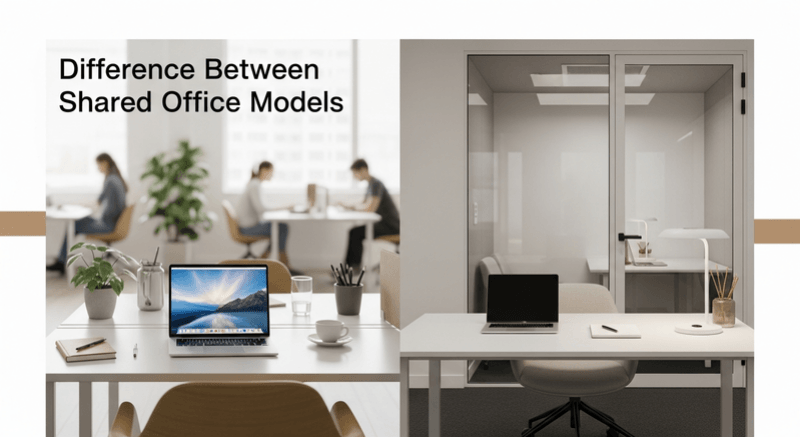


Navigating the New World of Work: Which Office Model is Right for You?
The traditional office landscape has changed forever. The one-size-fits-all approach of a long-term lease is no longer the only option. Today, businesses have a wide array of choices, from private suites to bustling shared spaces.
Understanding the key differences between these models is crucial for making a smart decision. This guide breaks down the most popular shared office models to help you find the perfect fit for your team's needs and budget.
The Baseline: Traditional Office Leases
Before diving into flexible options, it's important to understand the classic model. A traditional lease involves renting an empty office space directly from a landlord for a long period, typically 5-10 years.
You are responsible for everything: furniture, internet, utilities, cleaning, and maintenance. While it offers complete control over your brand and culture, it comes with high upfront costs and very little flexibility if your business needs change.
The All-Inclusive Option: Serviced Offices
Serviced offices are a significant step up in flexibility. These are fully-equipped private offices within a larger, managed building. They come with everything included in one monthly fee: furniture, high-speed internet, utilities, reception services, and access to shared meeting rooms.
Often called executive suites, they offer a professional environment without the long-term commitment of a traditional lease. Contracts can range from a few months to a year, making them ideal for small teams, satellite offices, or businesses testing a new market.
The Community-Driven Choice: Coworking Spaces
Coworking spaces exploded in popularity by focusing on community and collaboration. Instead of isolated offices, they offer a mix of open-plan "hot desks," dedicated desks, and some private offices within a shared, dynamic environment.
The main draw is the vibrant atmosphere, networking opportunities, and ultimate flexibility. Memberships are often on a monthly basis per person. This model is a favorite among freelancers, startups, and remote workers looking for a professional workspace with a strong social element.
The Modern Solution: The Workspace Network (or Aggregator) Model
The newest and most dynamic player is the workspace network model. This is not a physical location but a technology platform—think of it as an "Airbnb for office space."
Platforms like Workobi provide access to a vast network of workspaces from various providers, all in one place. You can book a hot desk, a meeting room, or a private office for a day, a week, or a month through a single app or portal. This model offers unmatched flexibility and choice, which is essential for modern hybrid teams.
It allows companies to provide their employees with workspace options near their homes, manage a distributed workforce efficiently, and pay only for the space they actually use. This data-driven approach is shaping the future of corporate real estate.
Comparing the Models: A Head-to-Head Breakdown
Let's compare these four models across the factors that matter most to businesses today.
Cost Structure
A traditional lease has high capital expenditure (CapEx) for fit-out and furnishing, plus ongoing operational costs. Serviced offices bundle everything into a predictable monthly operational expense (OpEx). Coworking is typically a per-person, monthly fee, making it easy to scale. The network model is the most efficient, often operating on a pay-as-you-go basis, eliminating waste from unused space.
Flexibility & Commitment
Flexibility is where the models differ most. Traditional leases are rigid, locking you in for years. Serviced offices offer shorter terms, usually 6-12 months. Coworking provides month-to-month flexibility. The network model is the clear winner, offering on-demand access with no long-term commitment required, allowing you to book space by the hour or day.
Amenities & Services
With a traditional lease, you source and manage all amenities yourself. The other three models provide a baseline of services, including Wi-Fi, coffee, printing, and front-desk support. Serviced offices often have a more corporate feel, while coworking spaces may add perks like networking events, workshops, and social gatherings.
Community & Culture
In a traditional office, you build your culture from scratch. Serviced offices offer a professional but often siloed environment with limited interaction between companies. Coworking is built around creating a diverse and collaborative community. A network platform gives you access to hundreds of different communities, allowing your team to choose the environment that best suits their task for the day.
Which Office Model is Right for Your Business?
The best choice depends entirely on your company's size, stage, and work style.
For Freelancers and Solopreneurs:
Coworking spaces are a perfect fit for individuals seeking community and a professional place to work. The on-demand nature of a workspace network is also ideal for booking space as needed without a monthly membership.
For Startups and Small Teams (2-20 people):
Serviced offices provide a private, branded space with the flexibility to grow. A network platform can also be a powerful tool, allowing a small, distributed team to meet and collaborate in different locations without the overhead of a dedicated office.
For Medium to Large Enterprises & Hybrid Teams:
This is where the workspace network shines. Large companies are using these platforms to manage their hybrid work strategies. They can ditch multiple leases and instead provide employees with a budget to book approved workspaces closer to home. This reduces commute times, improves work-life balance, and gives the company valuable data on workspace usage to make smarter real estate decisions.
The Future is Flexible
The evolution from static, long-term leases to dynamic, on-demand workspace networks is clear. Businesses are no longer choosing just one office; they're building a flexible workspace strategy that empowers employees and optimizes costs.
By understanding the unique benefits of each model, you can confidently select the right path for your company's journey. Ready to explore the power of a workspace network?
Discover how you can give your team access to hundreds of workspaces on demand. Learn more about Workobi today!